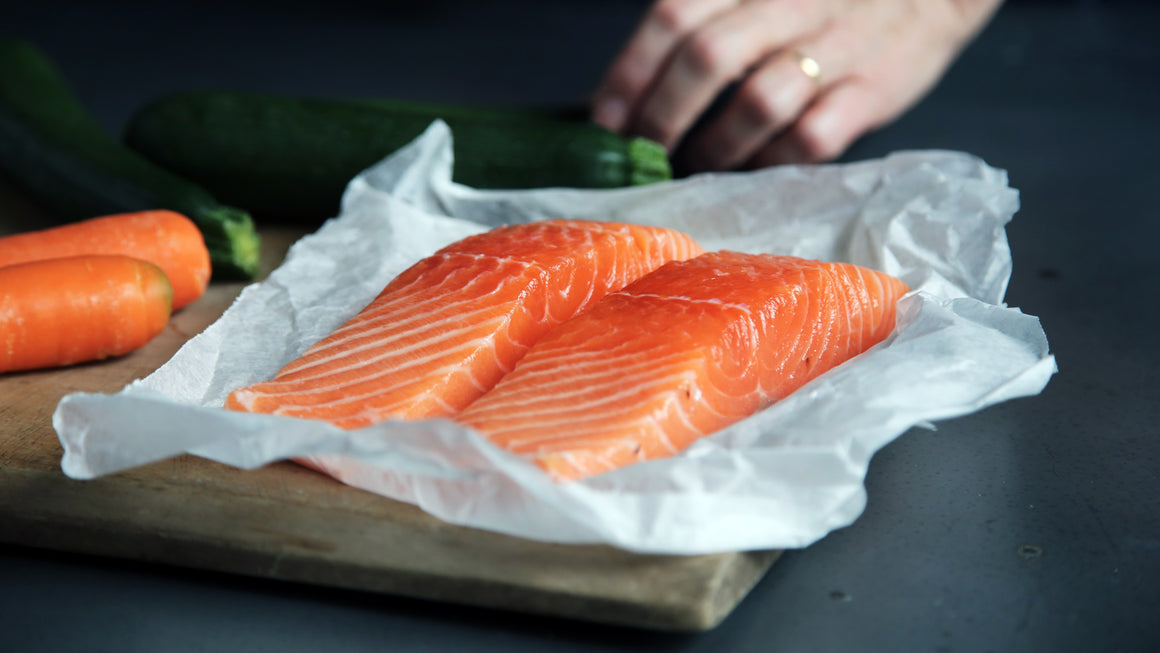
Atlantic salmon and Fjord trout are closely related but offer distinct culinary experiences. While Atlantic salmon is known for its mild, clean flavor and "velvety" texture, Fjord trout (often rainbow trout raised in sea water) is prized for a richer, more buttery taste and a firmer bite.
Detailed Comparison
-
Appearance & Identifying Marks:
-
Skin: Both have silvery skin, but salmon usually has more black spots near its face. Fjord trout often features a thin red line along its side.
-
Head Shape: The head of a salmon is sharper and longer, whereas a trout's head is shorter and rounder.
-
Scales: Salmon typically have larger scales than Fjord trout.
-
Farming & Habitat:
-
Environment: Atlantic salmon are raised in the icy, open waters of the Norwegian Sea. Fjord trout are raised specifically where seawater meets fresh glacier meltwater in deep, calm fjords.
-
Availability: Fjord trout is a more exclusive product, making up only about 5% of Norway's total salmonid production.
-
Nutritional Nuances:
-
Fat Distribution: Trout stores most of its fat in the abdomen (the belly), making its muscle flesh leaner than salmon's.
-
Vitamins: Salmon is typically higher in Vitamin A, while trout often contains more Vitamin D.
- Omega-3s: Both are excellent sources, but Atlantic salmon generally has a higher total fat and Omega-3 content per serving.
Atlantic salmon and Fjord trout are versatile enough for many of the same preparations, but specific techniques can highlight their natural differences in fat distribution and texture.
Recommended Cooking Techniques
-
Fjord Trout: Gentle Heat & Raw Prep
-
Low-Temperature Baking/Searing: Since Fjord trout has a firmer bite, it is less prone to falling apart than salmon. Chefs often recommend searing it over medium heat to keep the center medium-rare.
-
Raw & Cured: Its vibrant red color and rich flavor make it a top choice for Sashimi, Poke bowls, or Ceviche.
-
Frying with Skin: Trout skin is thin and crisps beautifully. One technique involves frying the fillet and using the skin as a "shard" garnish for texture.
-
Atlantic Salmon: High Heat & Infusions
-
Crispy Skin Pan-Searing: Salmon's "velvety" texture contrasts well with a hard sear. Start skin-side down in a hot pan, then finish with the heat off to render the fat and achieve maximum crunch.
-
En Papillote (Steaming in Paper): Because Atlantic salmon is slightly softer, steaming it in parchment paper with aromatics like fennel, ginger, and lemon prevents it from drying out while infusing deep flavor.
- Slow-Poaching or Confit: High-quality salmon benefits from gentle poaching in olive oil or a citrus brine to maintain its smooth, buttery mouthfeel without toughening the muscle.